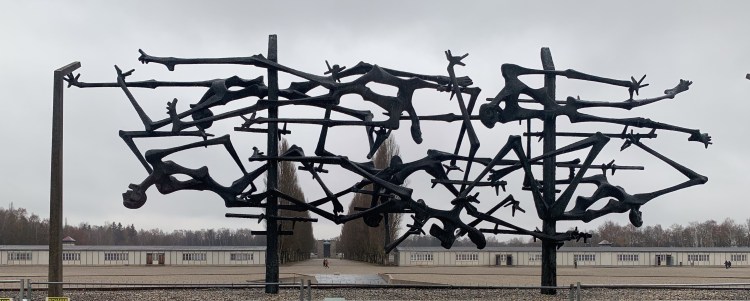
 We were and weren’t looking forward to our day at Dachau where my grandfather, great grandfather and uncles were inmates in 1938. We wanted more knowledge about what occurred in the camp, but went there with extreme trepidation and lumps in our stomachs. On our journey we visited many places from our family’s history, but this was our first visit to one of the camps. Leading up to our visit we reminded ourselves of the horrendous stories of the Kristallnacht pogrom that took place November 1938, and which lead to the arrest of around 30,000 Jewish men all over Germany, including my grandfather, great grandfather and many of our great uncles and cousins who were sent to Dachau with more than 10,000 others (the rest were sent to Sachsenhausen or Buchenwald or left the country with a promise of no return). At Dachau, we were given copies of the original records of the time they spent there.
Dachau was the Nazi’s first concentration camp and was established in 1933 to house political prisoners. It was a model for all other concentration camps around Europe, and the only one to have existed through the end of the war, twelve years in total. The conditions at the camp were terrible, with overcrowding, torture and lack of food and medical care.
On November 10th(?), 1938 my grandfather was with some of his friends when the Gesapo came in and arrested them because their names were on a “list”. He didn’t know what was happening, his name wasn’t on the list, so they let him go. Close to midnight that same night, the Gestapo showed up at my grandfather’s home in Lörrach – beat him, arrested him, and took him to jail. He was taken by train and then freight car, along with all the other Jewish men of the Baden area (including my grandmother’s father and uncles), and brought to Dachau, right outside Munich. We learned that this pogrom, later called Kristallnacht, was in retaliation for a 17 year old Polish Jew who had shot a German diplomat because he was upset that his parents, Polish Jews who lived in Germany for decades, had been deported back to Poland. The Jewish men and families were told that they were being brought to these camps for “protective custody” against the townspeople.
When we arrived at Dachau, it was a bit of a walk from the parking lot to the entrance to the camp. My grandfather, in his recording, had mentioned a walk from the train to the camp, still not knowing exactly where they were headed or what this was all about.
My grandfather talks about crossing a bridge shortly before the entrance of the camp where SS officers, with long sticks, knocked many of the prisoners into the water and held them down, to humiliate, scare and in some cases drown them. Why? Simply to show that they now were nothing and that they, the SS, now had all the power over them.
We were very anxious to find that bridge. It was definitely something that vividly stood out in my grandfather’s recollections. The bridge we found wasn’t quite as long, or wide or the water as deep as we had imagined it would be. But, of course this was now 80 years later. We asked people who worked there if that was the only bridge close to an entrance, and it was.
Then they reached an iron gate with a sign, “Arbeit Macht Frei”, Work Will Set You Free. This sign was not only at then entrance to Dachau, but also a lot of other concentration camps, as well, including Auschwitz. They were marched into the camp and just stood there, numb, for an entire day and a half. What was going to happen to them? Then, they had to stand naked for hours until they saw a Nazi doctor who recorded every bump and bruise on their bodies. Their heads were shaved, so they all looked the same.
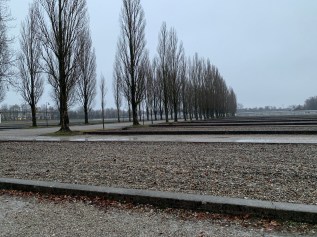
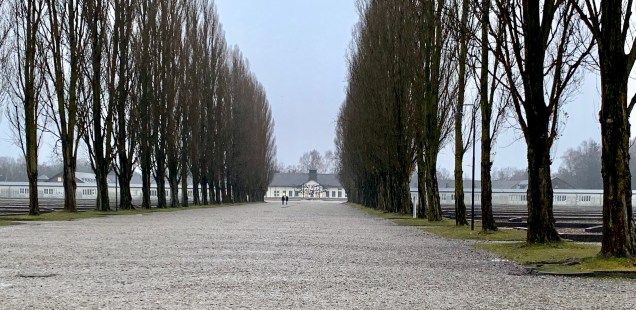
We visited Dachau on a dark, cold, rainy November day, exactly 80 years from the month that my relatives along with 30,000 men entered on November 11, 1938. We walked through the same gate as the prisoner did 80 years earlier and the sight of the sign Arbeit Macht Frei sent a chill through our bodies. We were surprised at the size of the Paradeplatz (the parade grounds) which my grandfather had described. It was much larger than we had ever imagined. It looked to us about the size of two football fields. This is the place where they performed a “roll call” twice a day, starting at 3 or 4 am. It rained down in buckets, with puddles everywhere. We remembered my grandfather talking about his frostbitten fingers, and the constant beatings that went on for minor infractions of their rules. We stood there and thought what kind of people could devise and bring to life such a devious plan of dehumanization. How could this ever have happened?


Inside the camp there was an excellent visitor center and museum with a chronological history of the Nazi regime and other interesting information, memorials, and the former prisoners’ camp with one barrack (dormitory) that was still standing. The camp is surrounded by walls and guard towers, plus the buildings that were used for torture, crematoriums, and a gas chamber that was never used.
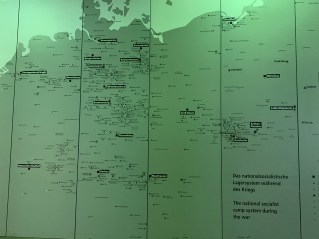

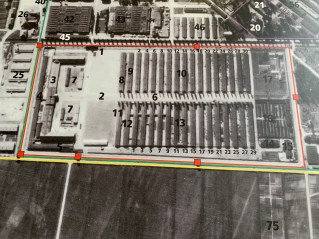
The administration office had a good library of books and records. We were met by the staff there who were expecting us. They were kind enough to let us use their conference room for the day, and they brought us records that they had collected about our many family members who had been inmates which included their name, where they are from, their prisoner number and entrance and release dates. MORE TK.
 rootstravel.blog