My mother, grandparents, and 6,500 other Jews from Baden in southwest Germany were deported from Freiburg, Germany to the Gurs internment camp in southwestern France on October 22, 1940. The journey involved three days and seven railway trains, culminating in their arrival in Gurs on October 25, 1940.
GURS
In France, there were no camps with gas chambers or crematoriums; however, the conditions in Gurs were horrendous. The lack of protection from the extreme elements, including snow, rain, and mud, made walking almost impossible. Unsuitable sanitation and the scarcity of food led to starvation and deaths due to diseases, including my great uncle Ludwig Beck and his son Walter. Families were torn apart, although women with young children were allowed to remain together, which fortunately included my mother and grandmother, who stayed together.
RIVESALTES
In March 1941, after enduring five months of these conditions, families and the elderly were offered the chance to transfer to Rivesaltes, another internment camp located in southern France near the Spanish border, in the hope of finding improved conditions. My grandparents chose to transfer, leaving my grandmother’s parents and other relatives behind, only to discover that conditions were not much better.
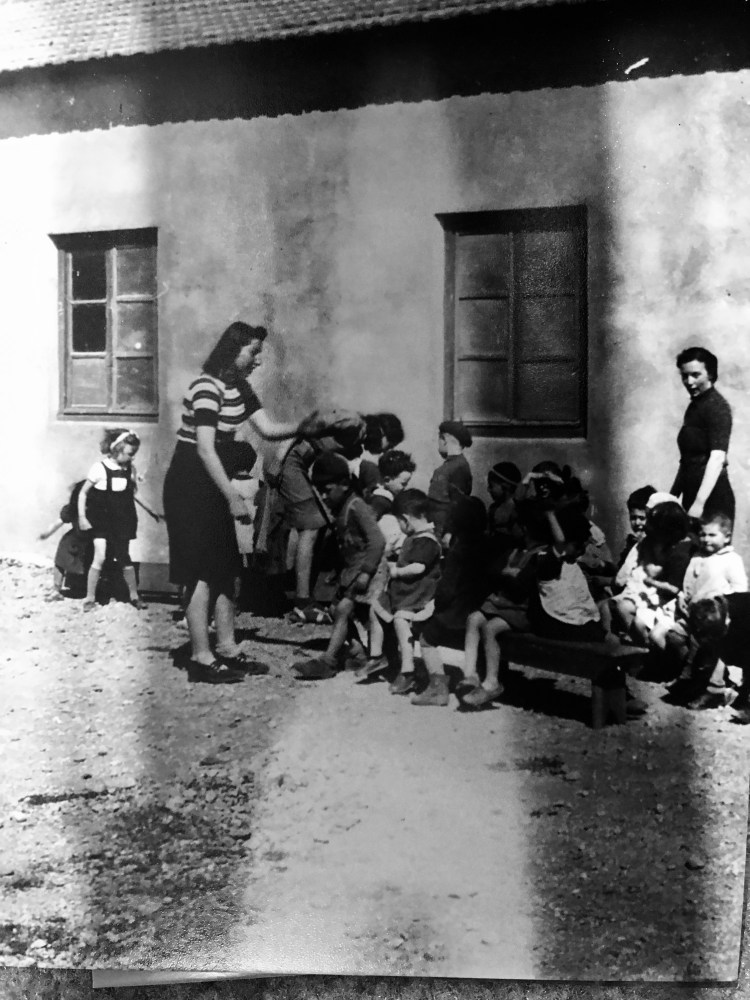
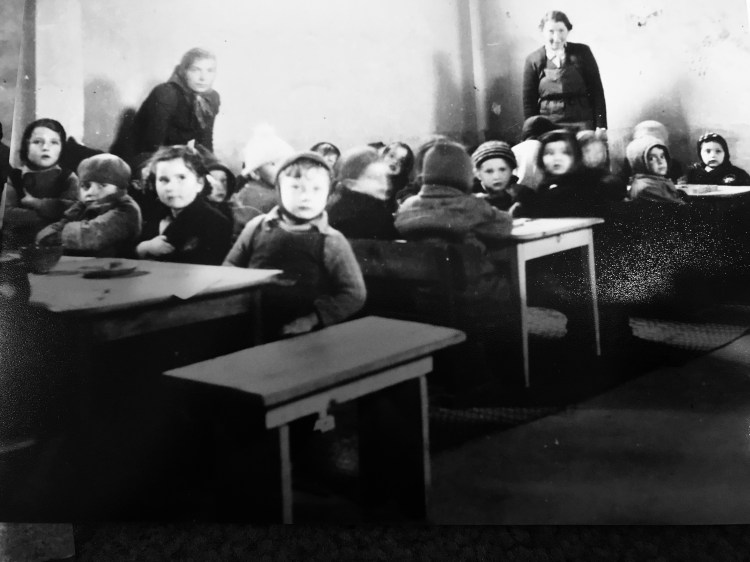
Rivesaltes was originally constructed to house refugees fleeing the Spanish Civil War. During WWII, it became the place of internment for approximately 17,000 to 18,000 Jewish refugees. They were accommodated in around 80-100 barracks, and despite being designed as a “family camp” with educational facilities like schools and preschools, the internees endured unimaginable suffering. Malnutrition, disease, and exposure to extreme heat and cold resulted in many deaths.
My grandmother, Alice, cared for the children in the Kindergarten, while my grandfather, Adolf (Paul), played a vital role in establishing a library at the camp. He also took responsibility for seeking additional food supplies, as the army rations they were supposed to receive often ended up stolen before reaching them.
My grandfather was among 600 other undernourished men who were forcibly sent to Brest in Brittany for four grueling months of forced labor. Their tasks involved working 12-hour days constructing underground submarine bunkers for the Germans, all while evading British bullets. Others were sent as cheap labor for the Vichy government. When my grandfather returned to Rivesaltes, he realized that escape was the only viable option.
In June 1942, after spending 15 months in the camp, my grandparents were approached by a volunteer social worker who asked if they would agree to let my five-and-a-half-year-old mother, Ronia, go into hiding elsewhere in France, where she would have better access to food and be safer. To make this happen, my grandparents had to sign a document giving her up and agreeing not to know the exact location where she would be taken. The OSE (Oeuvre de Secours aux Enfants) took charge of her and placed her in various homes in France until she found refuge in a children’s home for war orphan’s in a chateau in the Haute Savoie near Annecy.
At the beginning of August 1942, my grandparents received a warning from one of the volunteer workers in the camp, Mlle Levy, that the situation was becoming increasingly dangerous. They came up with a plan to hide in the roof of the children’s school barracks for 10 days. This decision proved fortunate, as the deportations to Auschwitz started immediately. With the help of Mlle Levy (and later the Jewish Underground), they successfully managed to escape from Rivesaltes and get to Montpellier where they eventually made their way to the Swiss border.
Tragically, by November 1942, all the internees at Rivesaltes had been deported to Auschwitz in Poland, and the camp was subsequently closed down.
My mom’s words:
In June 1942, after a few months in Rivesaltes my parents were approached by a worker from the Organization to Save the Children (Oeuvres de Secours des Enfants) who told them that they would try and take me to a safe place in order to give me a chance to survive. If my parents wanted to give me a chance at life, they had no other choice but to let me go. I was four and half years old at the time when I was taken from the camp (my parents were not told where I would be taken) to a safe house in France and then to the Chateau des Avenieres in Cruseilles, a place in France that was run by the Swiss Red Cross for children who were sick, mostly war orphans, with a few Jewish children hidden there as well. I lived at the Chateau with other hidden children and orphans for over 13 months until I would hopefully be reunited with my parents in Switzerland. -rb
Put into Hiding at Chateau des Avenieres, Annecy, France
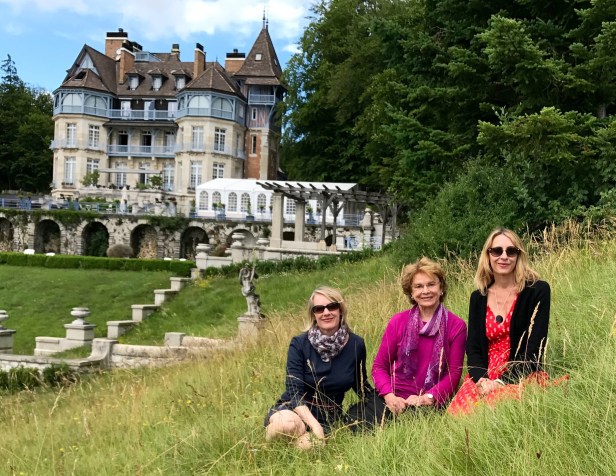
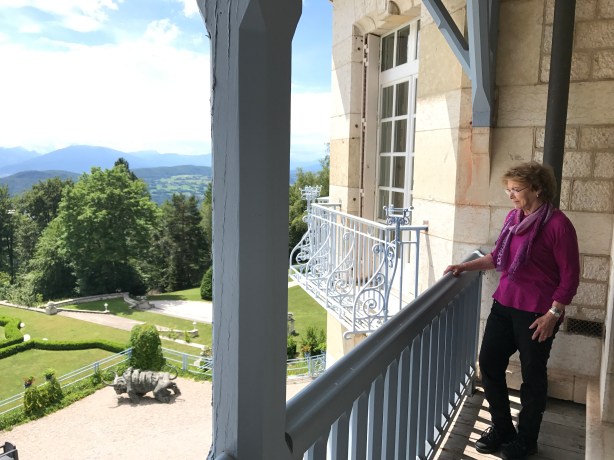
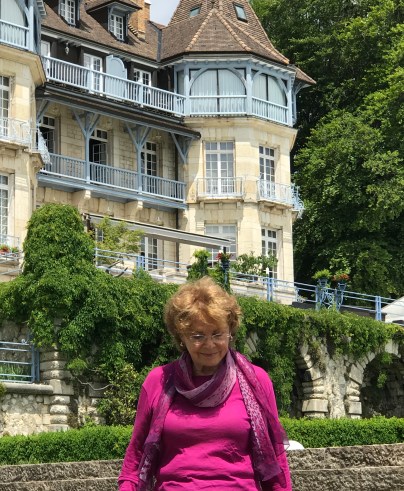
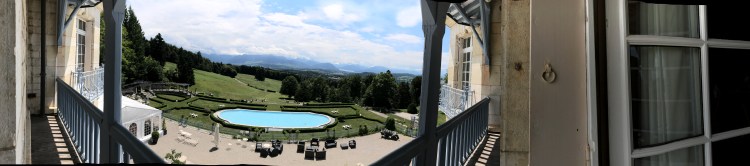
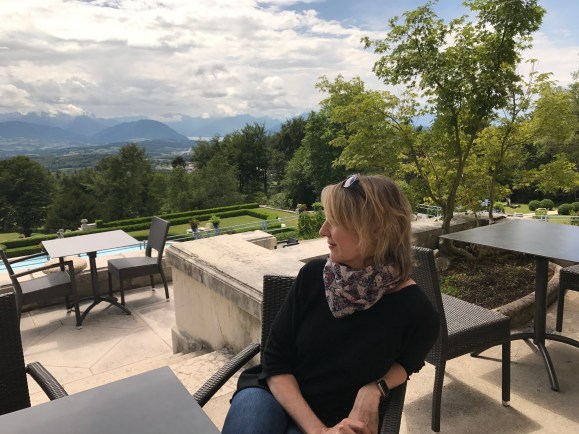
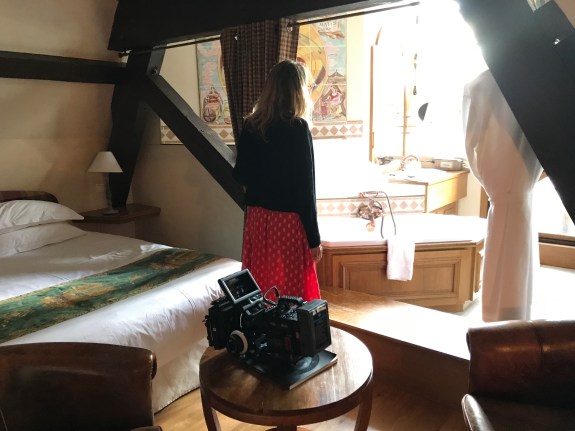
My mother and I had visited the Chateau on previous trips to France, but Judi had never been there, so on this occasion we decided to stay the night. It turned out to be a good decision as now the Chateau has been transformed into a 5-star hotel with beautifully decorated rooms. We had a film crew with us for the day.
My mom’s words:
It was the back stairs that I remembered the most, for these were the stairs that led to our very upper rooms where we children slept–many children in one room. It was this back stairs and these rooms way at the top of the chateau that contained all my memories: crying myself to sleep, feeling abandoned by my parents, answering children’s questions “What are you?” but having been warned never to say that I was Jewish. But what was I to say? Don’t use the bathroom at night one of the children told me, a witch lives up the stairs next to the bathroom and will get you. I never ever got up at night. After a while at the chateau I became pretty fluent in French, they changed my name from Ronya which is difficult to pronounce in French to Ronja. It remained Ronja till we came to the USA. -rb

 rootstravel.blog